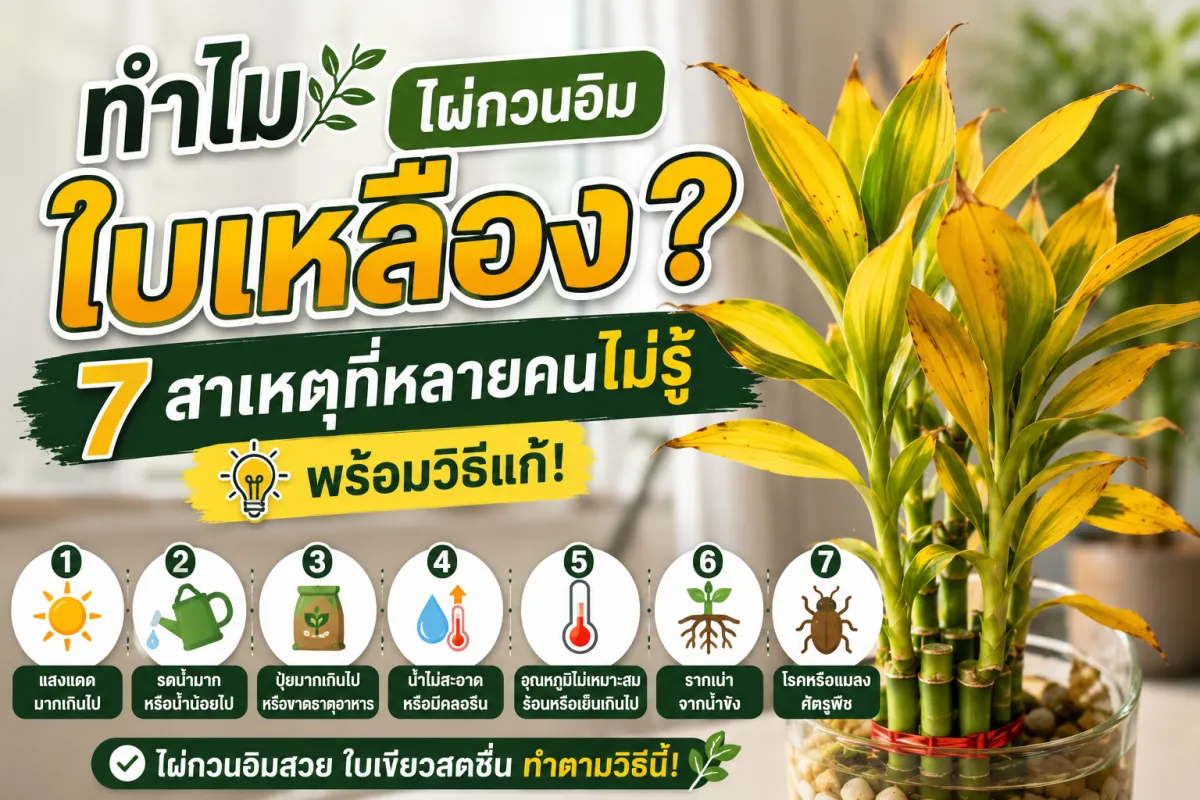

If you keep lucky bamboo and notice the leaf tips turning brown or crispy, do not panic. It is a very common problem, and in most cases it can be fixed once you know the real cause.
This guide walks through why lucky bamboo leaf tips turn brown and how to care for the plant so it bounces back.
Quick answer
Brown leaf tips on lucky bamboo usually come down to water quality, too much direct sun, dry air, over-fertilising, or a build-up of minerals and chlorine in the water. Fix the underlying cause and the new leaves will come back green and healthy.
7 reasons lucky bamboo tips turn brown
1. Chlorine or mineral build-up from tap water
Lucky bamboo is fairly sensitive to chlorine, fluoride and certain minerals in tap water. Used over a long period, the leaf tips start to dry out and brown.
How to fix
- Let tap water sit for 24 hours before using it, so chlorine can evaporate
- Or use filtered water or chlorine-free drinking water
- If grown in water, change the water every 7–14 days
2. Too much direct sunlight
Lucky bamboo likes light but not harsh direct sun, especially afternoon sun, which scorches and fades the leaves.
How to fix
- Place it in bright but indirect light
- Avoid direct sun through a hot window
- Indoors, keep it near a window with natural light but out of the direct beam
3. Over-fertilising
It is tempting to think more fertiliser means faster growth, but for lucky bamboo too much feeding is a common cause of burnt tips.
How to fix
- Use only a small amount
- There is no need to feed often
- If grown in water, use a fertiliser made for water-grown plants and follow the label
4. Low humidity
Air conditioning running all day, or very dry air, pulls moisture from the leaf tips until they dry and brown.
How to fix
- Keep the plant out of direct airflow from the AC
- Raise humidity with a shallow tray of water nearby
- Or group several plants together to lift the humidity around them
5. Overwatering or the start of root rot
For lucky bamboo grown in soil, watering too often starves the roots of air and rot begins — which shows up as yellow leaves and brown tips.
How to fix
- Water only when the soil starts to dry (see also: the best time of day to water indoor plants)
- Use a pot with drainage holes
- If you find rot, trim the damaged roots and replace the growing medium
6. The plant is adjusting to a new environment
Right after you bring it home, or after moving it to a new spot, the plant can get stressed and show brown tips for a while.
How to fix
- Leave it in one place for 2–3 weeks
- Avoid moving it back and forth
- Keep care consistent and let it settle in
7. Natural ageing of old leaves
If only the lower or oldest leaves have dry tips while new growth stays green, this is normal leaf turnover — not a problem.
How to fix
- Trim just the dried tip
- Use clean scissors and follow the natural shape of the leaf
- No need to remove the whole leaf if most of it is still green
Can you cut off the brown tips?
Yes. A dried tip will never turn green again, so trimming the damaged part makes the plant look better. Use clean scissors and cut along the natural leaf shape so the result looks natural rather than blunt.
How to prevent brown tips coming back
- Use clean water and change it regularly
- Keep it in bright indirect light, out of direct sun
- Do not over-fertilise
- Check the roots and soil moisture regularly
- Avoid moving the pot around often
If you lose track of when you last changed the water, the free Plukplearn Plant Care system can remind you for each individual plant.
Summary
Brown tips on lucky bamboo do not mean the plant is dying. Most causes come down to care you can adjust — water quality, light, fertiliser or humidity. Fix the root cause and the new leaves will grow back green, strong and healthy.
Looking for a new plant? Browse our lucky bamboo collection or the desk-size lucky bamboo for your workspace.