Lucky bamboo is an easy-going plant, but yellow leaves are one of the most common complaints — often from people who water on schedule and think they are doing everything right.
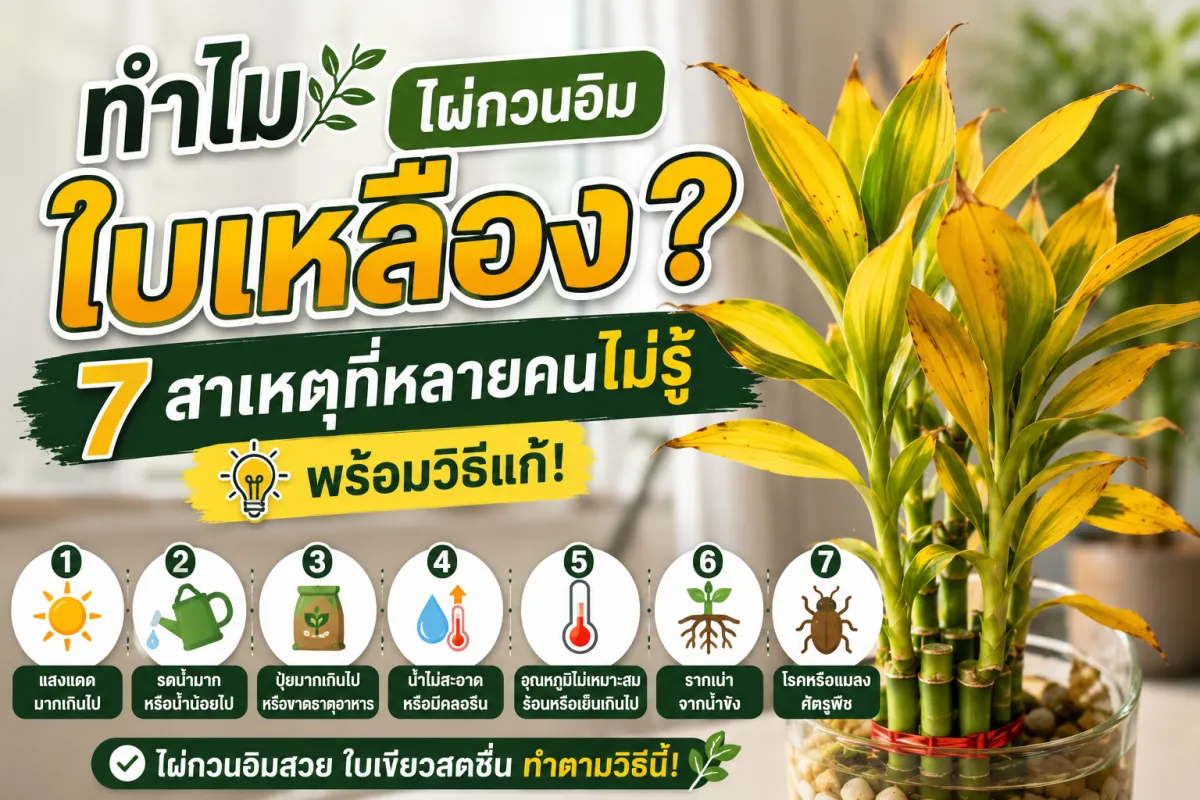
The truth is that yellow leaves are rarely about a lack of water. Several other causes get overlooked. Find the real one early and the plant will recover and push out new growth.
Quick answer
Yellow leaves on lucky bamboo usually come from overwatering, poor water quality, harsh sunlight, root rot, a lack of nutrients, or the plant adjusting to a new environment. Identifying the cause is the fix.
Yellow leaves vs brown tips
These are two different problems with two different fixes.
- The whole leaf turns yellow — normally a root, water or nutrient issue: the roots cannot do their job, or the plant is underfed (covered in this guide)
- Only the tip dries or yellows — normally chlorine, sun, dry air or too much fertiliser: see why lucky bamboo leaf tips turn brown
If you see both at once, check the roots first — root rot can produce either symptom.
7 reasons lucky bamboo leaves turn yellow
1. Overwatering
The number one cause is soil that never dries out. The roots are starved of air and begin to rot, and once they cannot take up water and nutrients the leaves slowly yellow.
How to fix
- Water when the soil starts to dry, not on a fixed schedule (see also: the best time of day to water indoor plants)
- Use a pot with drainage holes and empty the saucer
- If the soil stays wet all the time, repot into a more open mix
2. Chlorinated tap water
Lucky bamboo is fairly sensitive to chlorine and the minerals in tap water. Used continuously, it can yellow the leaves or brown the tips.
How to fix
- Let tap water sit for about 24 hours before using it
- Or use filtered or drinking water
- If grown in water, change the water every 7–14 days
3. Too much direct sun
Lucky bamboo likes light but should not sit in direct sun, especially in the afternoon — the leaves fade, yellow and scorch.
How to fix
- Move it to bright but indirect light
- Avoid harsh afternoon sun
- Indoors, keep it near a window with natural light but out of the direct beam
4. Root rot
Lift the plant out: brown or black roots, a bad smell, or mushy texture all mean rot has started.
How to fix
- Trim away the damaged roots with clean scissors
- Replace the water or the growing medium completely
- Water less for the first few weeks and let the plant settle
5. Lack of nutrients
Lucky bamboo kept in plain water for a long time with no feeding at all will eventually yellow simply because it is running out of nutrients.
How to fix
- Use a small amount of fertiliser made for water-grown plants
- In soil, a slow-release fertiliser at the rate on the label is enough
6. The plant is adjusting
Right after coming home, or after being moved to a new spot, the plant can be stressed for a while and drop a few yellow lower leaves.
How to fix
- Leave it in one place for 2–3 weeks
- Avoid moving it back and forth
- Keep care consistent and let it settle in
7. Natural ageing
If only the lowest leaves yellow while new growth stays fresh and green, this is normal leaf turnover, not a problem.
How to fix
- Remove the yellow leaves
- Carry on with normal care
- Check that new leaves are still coming in strong
How to prevent yellow leaves
- Check soil moisture before every watering
- Water with clean water
- Keep it in bright indirect light
- Change the water regularly if grown in water
- Avoid moving the pot around often
- Look at the roots and leaves from time to time
If you lose track of when you last watered or changed the water, the free Plukplearn Plant Care system can remind you for each individual plant.
Summary
Yellow leaves on lucky bamboo do not always mean the plant is dying. Most cases come from care that can be adjusted — too much water, poor water quality, or too much sun. Fix the underlying cause and the plant will recover and grow fresh green leaves again.
Looking for a new plant? Browse our lucky bamboo collection or the desk-size lucky bamboo for your workspace.